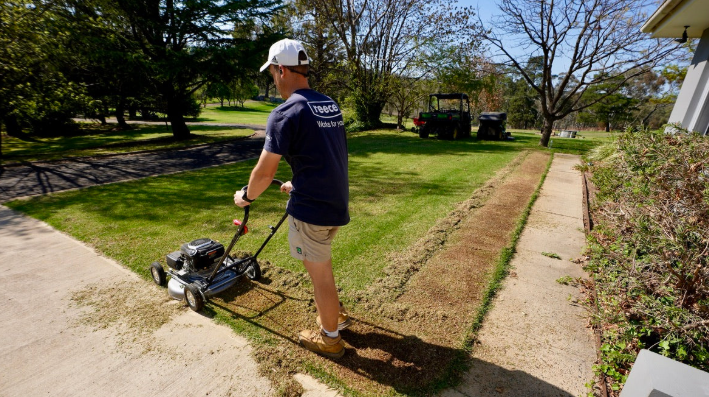
Lawn renovation — the process of restoring a tired, patchy, or heavily degraded lawn to a healthy, uniform, and attractive condition — is a project that rewards careful planning and execution but can appear daunting to homeowners who have never undertaken it before. In Hervey Bay’s subtropical climate, with its hot humid summers, distinct dry season, and the particular soil and pest challenges that characterise the Wide Bay region, a successful lawn renovation requires an understanding of local conditions and the selection of grass varieties and renovation approaches that are suited to the specific context of the property and its use.
Assessing the existing lawn
Before beginning any renovation work, a thorough assessment of the existing lawn’s condition provides the information needed to plan the appropriate approach. Key questions include: what proportion of the lawn is composed of the desired grass species versus weeds? Is the soil compacted? Is there a significant thatch layer? Are there identifiable pest or disease problems? Are there drainage issues that are creating persistently wet areas or bare patches? Are there shading changes — new trees, fences, or structures — that have altered the growing conditions since the lawn was first established? The answers to these questions determine whether the renovation approach needs to be primarily soil-focused, weed-management-focused, or whether the existing lawn coverage is sufficient to renovate in place.
Accessing quality turf supplies Hervey Bay from a local supplier who understands Hervey Bay’s growing conditions allows homeowners who need to re-turf significant areas to select varieties that are proven performers in the Wide Bay climate — including buffalo varieties suited to the humidity and the moderate shade tolerance required in many suburban gardens, and couch grass or zoysia options for properties with full sun and high-traffic areas where hardiness and recovery rate are priorities.
Soil testing prior to renovation provides valuable baseline data about pH, nutrient levels, and in some cases soil texture and organic matter content. Hervey Bay soils vary considerably — from the sandier profiles common near the coast to heavier clay-influenced soils in some inland areas — and understanding the specific characteristics of your soil before applying amendments and fertilisers ensures that the renovation programme addresses actual deficiencies rather than guessing based on general recommendations that may not match your property’s needs.
See also: What the Research Says About Mindfulness and Anxiety
Timing the renovation
Timing is critical to lawn renovation success, and the optimal window in Hervey Bay aligns with the onset of the warmer months — late September through to November — when soil temperatures are rising, the wet season is approaching, and warm-season grass species are entering their active growth phase. Renovating at this time maximises the lawn’s capacity to recover from the disturbance of aeration, scarification, and any turfing or overseeding, taking advantage of the combination of warmth, moisture, and day length that drives grass establishment and lateral spread during the summer growing season.
Avoiding renovation immediately before or during the driest and hottest part of the year — typically July to September in Hervey Bay’s continental-influenced dry season — is important, as newly laid turf and renovated areas require consistent moisture to establish and are highly vulnerable to heat stress and moisture loss during this period. If circumstances require renovation outside the ideal window, more intensive irrigation, shade cloth on new turf for the first two to three weeks, and more conservative renovation disturbance — avoiding deep scarification or extensive de-thatching — reduces the establishment risk.
Core renovation techniques
Core aeration — the removal of small plugs of soil using a hollow-tine aerator, typically run across the lawn in two perpendicular passes — is one of the highest-value renovation interventions for lawns suffering from soil compaction and reduced water infiltration. The cores brought to the surface are left to break down and be worked back into the lawn surface, and the channels left by the tines allow water, oxygen, and nutrients to penetrate the soil profile to depths that surface application cannot reach. Following aeration with a topdress of quality lawn sand or a sand-soil blend further improves soil structure and creates a better growing medium for the grass roots.
Scarification or vertical cutting removes the accumulated thatch layer that builds up in warm-season grasses, particularly in mature buffalo and kikuyu lawns where the vigorous lateral growth of the grass produces organic matter faster than it decomposes. Light scarification can be achieved with a steel-tine rake; heavier thatch accumulation requires a mechanical scarifier. The process is confronting — the lawn typically looks dramatically worse immediately after scarification than before — but the subsequent flush of growth from grass released from the suppression of a heavy thatch layer usually vindicates the process within four to six weeks.
Approaching lawn renovation, like approaching natural link building for a website, benefits from understanding the underlying principles that drive outcomes rather than simply applying tactics without a strategic framework. Both disciplines reward patience and a focus on sustainable, long-term results over quick fixes that address symptoms without resolving the underlying conditions that created the problem in the first place.
Fertilising for renovation success
Fertilising during the renovation period supports the rapid establishment and lateral spread that fills in bare and sparse areas and gives the lawn the density and vigour to compete effectively against weed encroachment as conditions normalise. A starter fertiliser applied at turfing or overseeding, followed by a balanced slow-release product applied at the beginning of the growing season, provides a nutritional foundation that supports root development, leaf growth, and the production of the lateral runners that are the mechanism by which warm-season grasses fill in bare areas. Maintaining appropriate nutrition throughout the first growing season after renovation is particularly important as the lawn builds the root system and canopy density needed to perform well in subsequent seasons without intensive management.
Weed management during and immediately after lawn renovation requires careful attention, as the disturbance of the soil surface and the temporary reduction in lawn coverage creates conditions that favour weed germination and establishment. Pre-emergent herbicides applied before renovation can reduce the germination of weed seeds exposed by the renovation process, while selective post-emergent herbicides can be used once the turf has established sufficiently to tolerate treatment — typically four to six weeks after laying new turf and two to three weeks after overseeding. Timing and product selection should be confirmed with the turf supplier or a local agronomist to ensure the herbicide is safe to use on the specific grass variety installed.