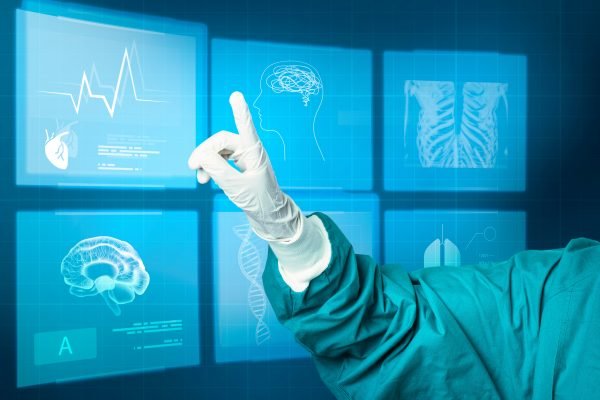
AI’s integration into medical diagnosis represents a significant shift in healthcare methodologies. By leveraging machine learning algorithms, AI systems can process extensive medical data, enhancing the precision of diagnostic interpretations. This advancement not only streamlines workflows but also offers deeper insights into patient conditions. As the capabilities of AI expand, questions arise about its implications for healthcare professionals and patient outcomes. Understanding these dynamics is crucial for navigating the future of medical practice.
The Role of Machine Learning in Medical Imaging
As advancements in technology continue to reshape the healthcare landscape, machine learning has emerged as a pivotal force in medical imaging.
Through sophisticated image recognition techniques, algorithms undergo rigorous training on extensive datasets, enabling them to identify and classify anomalies with remarkable accuracy.
This evolution not only enhances diagnostic precision but also empowers healthcare professionals, granting them greater autonomy in decision-making processes.
Predictive Analytics and Risk Assessment
Predictive analytics plays a critical role in enhancing risk assessment within the healthcare sector. By employing predictive modeling techniques, healthcare professionals can effectively identify patient populations at varying risk levels.
This process of risk stratification enables tailored interventions, optimizing resource allocation and improving patient outcomes. Ultimately, the integration of predictive analytics fosters a proactive approach to health management, enhancing overall healthcare efficiency and effectiveness.
Enhancing Diagnostic Accuracy With AI
Integrating AI into medical diagnostics has emerged as a transformative strategy to enhance accuracy in identifying diseases.
AI algorithms are increasingly employed within diagnostic tools, improving data interpretation and enabling more precise outcomes.
The Future of AI in Patient Care
While advancements in artificial intelligence continue to reshape various sectors, its potential impact on patient care remains particularly promising.
Future applications may include enhanced personalized treatment plans tailored to individual patient needs and preferences.
Additionally, AI-driven remote monitoring systems can facilitate continuous health assessments, allowing for timely interventions.
These developments could significantly improve patient outcomes while promoting autonomy and engagement in their healthcare journeys.
Conclusion
In conclusion, the integration of AI in medical diagnosis is poised to redefine healthcare practices, enhancing both accuracy and efficiency. Notably, studies indicate that AI systems can achieve diagnostic accuracy rates exceeding 94% in certain imaging tasks, surpassing human specialists. As these technologies continue to advance, their ability to process and analyze complex medical data will likely lead to improved patient outcomes and a transformative shift in clinical decision-making, reaffirming AI’s pivotal role in the future of healthcare.

